Product
Scope, priorities, shipping decisions.
- Mandate
- Hold scope, priorities, and the decision of what to build next.
- Deliverable
- A product scope the other seats can build from.
- Review partner
- Reviewed with Research.
Autonomous software development
Turn your idea into a structured product plan, coordinated build steps, and reviewed work — with you in control.
Four stages, from an editable brief to a review that still has a person at the gate.
Placeholder · M02
SuperPlanA real capture of the editable structured fields will replace this frame.01 Define
SuperPlan captures product, frontend, backend, and architecture in editable structured stages.
01 Define
SuperPlan captures product, frontend, backend, and architecture in editable structured stages.
Placeholder · M02
SuperPlanA real capture of the editable structured fields will replace this frame.02 Plan
MainPlan produces ordered build steps. Changes to the brief invalidate stale steps and prompts.
Placeholder · M04
Build stepA real engineering plan will replace this frame, with secrets and personal data removed.03 Build
Engineering receives one accepted step at a time, not a giant context dump.
Placeholder · M04
Accepted stepA real accepted-step view will replace this frame.04 Review
Critics use sources, files, missing states, and actual code evidence. Human approval gates remain in place.
Placeholder · M05
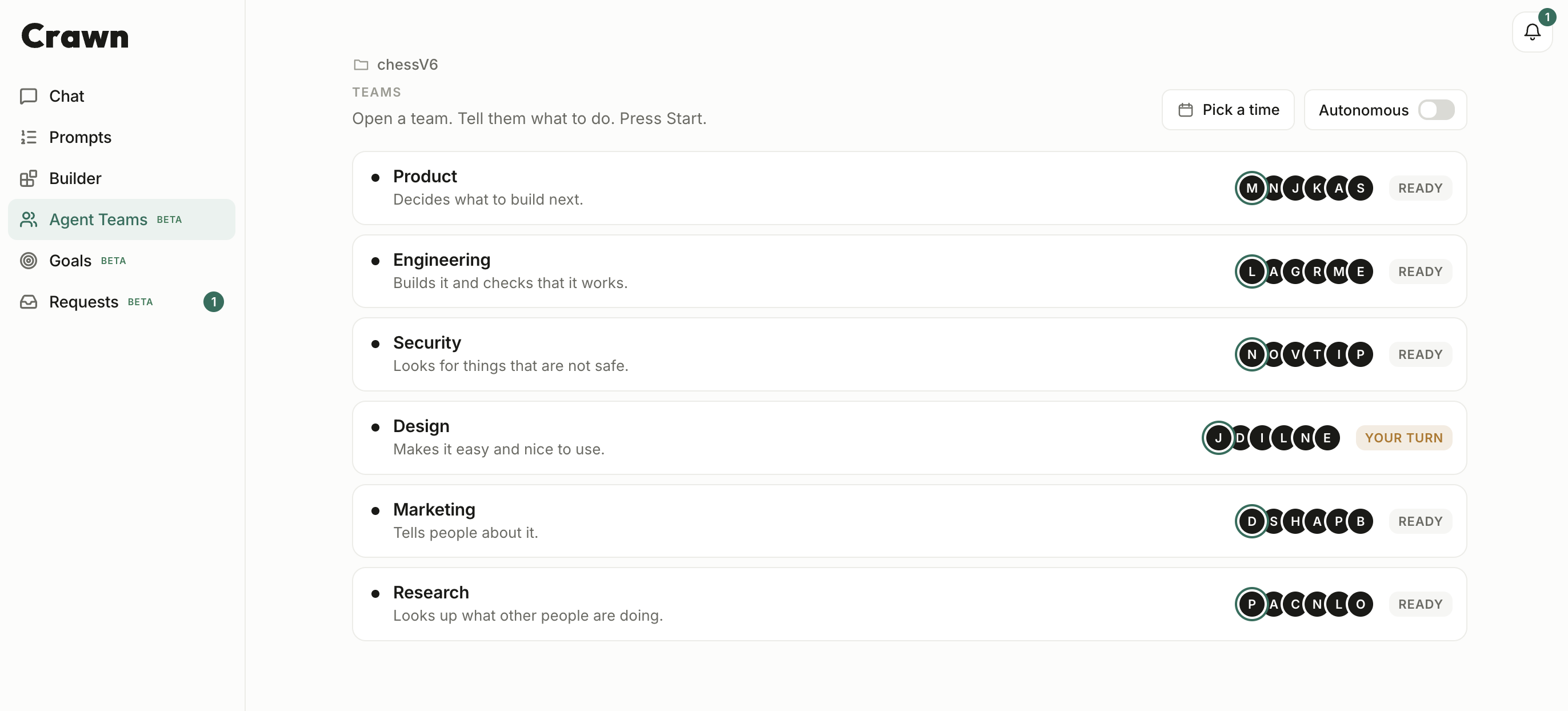
Evidence reviewA real critic review will replace this frame. It should show evidence, not an invented score.Each seat has a job. Selecting a role explains its mandate. These are not six shells running on their own.
Product
You decide when it matters. A pass can prepare work. It cannot spend, publish, change the stack, or clear an open gate.
Request
Needs your answer
A seat is blocked on a decision only you can make. That step waits until you reply.
Interface specimen of request states. A product screenshot of this panel will replace it when one is cleared to publish. Placeholder M06.
No product recording is published here yet. The sequence below is a reconstructed outline of SuperPlan, one accepted step, review, and an approval request. It is not footage of a successful run.
Placeholder · M02
SuperPlanReconstructed outline. Not a captured screen.01
The brief is structured and still editable: product, frontend, backend, and architecture.
Placeholder · M04
Accepted stepReconstructed outline. Not a captured screen.02
MainPlan’s list is ordered. Engineering receives one accepted step, not the whole brief at once.
Placeholder · M05
Execution and reviewReconstructed outline. Not a captured screen.03
The step runs, then a critic answers from sources, files, missing states, and the code.
Placeholder · M06
Approval requestReconstructed outline. Not a captured screen.04
A gate opens when the decision is yours: answer, review, or leave the step unrun.
There is no video, so there is no spoken transcript. When a 30–90 second recording is published, this section will carry captions and a transcript of that recording. Until then, the four steps above are the whole sequence: SuperPlan, an accepted step, execution with an evidence review, and an approval request that waits for a person.
Editable structured product brief.
Inspectable prompts for individual jobs.
Specialist seats with mandates.
Evidence-based cross-team reviews.
Budgeted, stoppable passes.
Tracked outcomes and clear human handoffs.
Crawn is an autonomous software-development platform. Specialized AI teams plan, build, review, and improve software. Consequential decisions stay with you.
No. Crawn does not ship, spend, publish, or make sensitive architectural changes without your approval. An open gate waits.
A coding assistant takes a prompt. Crawn coordinates a product brief, bounded steps, specialist teams, evidence-based criticism, autonomous passes, and explicit approval gates.
On the desktop, Crawn works in a folder you open. A cloud model receives that step’s prompt and excerpts when you ask it to reason or code. Cloud Studio uses a hosted sandbox, so code and prompts leave your machine by design.
No. The sequence lower on the page is a reconstructed outline. A product recording will replace it when one is ready to publish. The Agent Teams image is a real product screenshot.
Crawn handles the coordinated work. You keep the decisions that matter.
Start Building